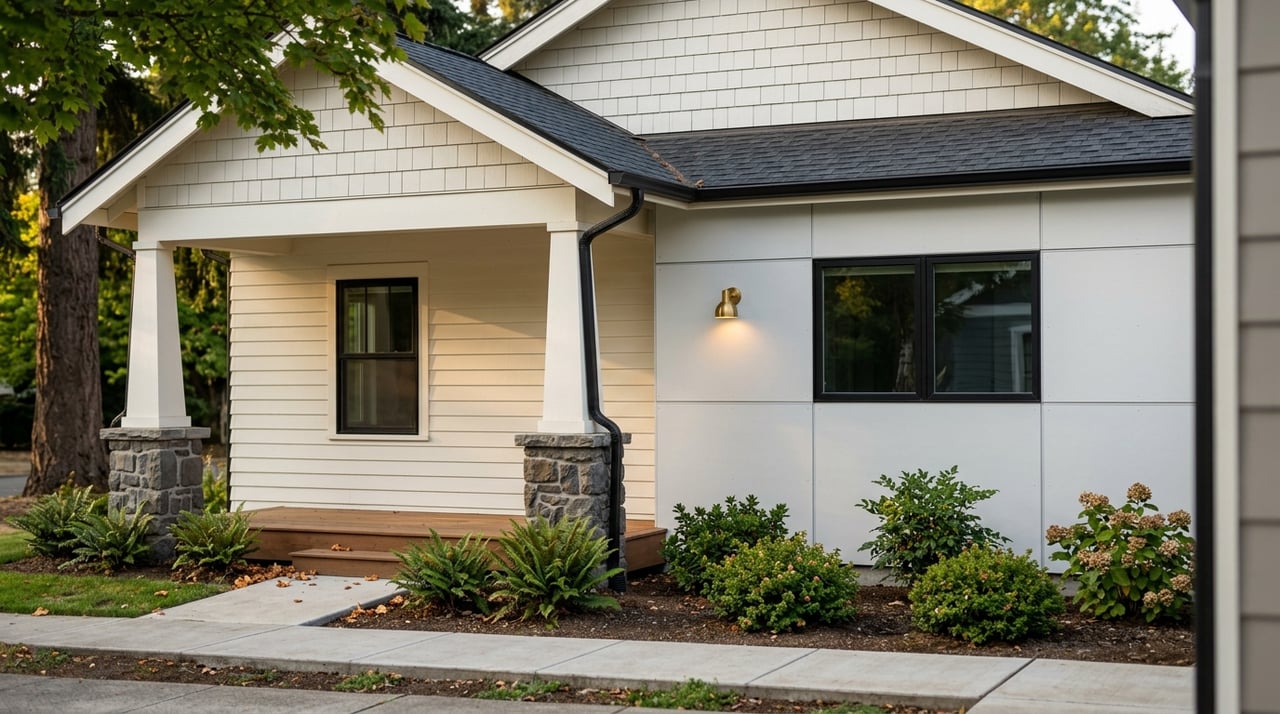
Wondering whether Oregon City is a better fit for your lifestyle if you love older homes or prefer a newer neighborhood feel? You are not alone. Many buyers see Oregon City as two different housing experiences, and that split can shape everything from lot size and home style to maintenance expectations and daily routine. This guide will help you understand how Oregon City homes differ across the city so you can focus your search with more confidence. Let’s dive in.
Why Oregon City Feels Like Two Markets
Oregon City’s housing mix makes more sense when you look at how the city developed. The city is organized by three terraces: the lower terrace near the river and downtown, the middle terrace or bluff where much of the early residential area took shape, and the upper terrace where later growth expanded eastward.
That pattern helps explain why buyers often experience Oregon City as a blend of historic-core homes and newer planned neighborhoods. In simple terms, older areas closer to the original townsite tend to offer more period character, while newer sections often reflect modern planning, mixed housing types, and open-space design.
Historic Homes Near The Core
If you are drawn to older architecture and neighborhoods with a strong sense of place, Oregon City’s historic-core areas may stand out right away. McLoughlin, Canemah, and blocks near downtown each reflect a different chapter of the city’s development.
These areas are closely tied to Oregon City’s early history. The city notes that as downtown commerce stayed concentrated below, residential neighborhoods and schools grew on the bluff, creating a lasting separation between the commercial center and many of the older residential blocks above it.
McLoughlin Home Styles
The McLoughlin district is not a one-style neighborhood. The city’s survey identified Queen Anne, Colonial Revival, Foursquare, Craftsman, Bungalow, and vernacular homes, with Bungalow listed as the most common style at 220 recorded properties.
That means you are more likely to find a mix of architectural details rather than one uniform look. If variety matters to you, McLoughlin offers a checkerboard of styles that can make each block feel visually distinct.
McLoughlin Lot Patterns
McLoughlin was laid out on the original Oregon City plat. Blocks are generally about 200 by 200 feet, and lots are commonly about 50 by 100 feet.
For buyers, that often means a more traditional neighborhood pattern. You may see homes placed on more regular lots with a street layout that reflects the city’s earliest residential planning.
Canemah’s Different Feel
Canemah has a different rhythm. The city describes it as a relatively intact former riverboat town, with several large lots spread across 41 blocks and about 63.71 acres.
Compared with McLoughlin’s tighter original plat, Canemah can feel more spacious and less grid-like. If you want a historic setting with a river-town identity, this area may feel especially appealing.
Downtown Connection
Historic living in Oregon City is not just about architecture. It is also about how these neighborhoods connect to the city center.
The city notes that 7th Street remains a commercial and retail corridor while much of McLoughlin is primarily residential, with churches and schools woven into the district. The Oregon City Elevator also links the bluff to downtown, reinforcing that everyday connection between hilltop homes and the lower terrace.
What Historic Review Means
Historic charm often comes with extra planning steps. In Oregon City, owners of designated historic structures have special responsibilities, and exterior changes such as windows, doors, siding, and additions can require review by Planning and or the Historic Review Board.
In Canemah, the city says most homes in the district require review for exterior alterations, and all new construction and additions require review. If you are considering a historic home, it is smart to factor this process into your timeline and renovation plans before you buy.
Good Questions To Ask
Before making an offer on a historic-area home, consider asking about:
- Whether the property is a designated historic structure
- What exterior changes have already been approved or completed
- Whether future additions or replacements may require review
- How the lot layout may affect expansion options
These questions can help you understand the balance between charm and flexibility.
Newer Neighborhoods And Growth Areas
If your priority is a more modern neighborhood layout, Oregon City also has several planned growth areas that offer a different experience. The city’s concept plans for Park Place, South End, and Thimble Creek help show how newer housing has been shaped.
These areas were planned with a broader mix of uses and housing types in mind. Instead of following the original bluff grid, they often reflect newer design goals such as connected trails, open space, transportation options, and varied lot configurations.
Park Place At A Glance
Park Place covers nearly 500 acres that were brought into the urban growth boundary. The concept plan was designed for 1,459 new dwelling units along with mixed-use neighborhoods, parks, trails, and a mix of housing types.
That scale matters because it signals a neighborhood form that was intentionally planned rather than built block by block over many decades. If you want a community with a more comprehensive layout, Park Place is a useful example.
More Housing Variety
The Park Place plan recommends low-density and low-medium-density residential zones. These can include detached homes, ADUs, townhomes or rowhouses, duplexes, and multi-family housing.
For buyers, that means newer Oregon City neighborhoods may offer more choices than a simple single-family-only pattern. If you are comparing price points, lot sizes, or housing formats, this flexibility can widen your options.
Hillside Design Matters
Topography plays a big role in newer development too. Park Place includes hillside local-street design with stormwater swales and identifies steep slopes as a constraint.
That means in some newer hillside communities, the land itself can shape everything from street design to drainage patterns. When touring homes, it helps to look beyond finishes and floor plans and pay attention to slope, retaining features, and site layout.
South End And Thimble Creek
South End emphasizes a variety of housing choices, trails, natural areas, family-friendly streets, and several transportation options. Thimble Creek is framed as a complete and sustainable community along Beavercreek Road, with mixed-use districts, open space, trails, green streets, and two mixed-use neighborhoods.
Taken together, these plans show how Oregon City’s newer areas aim for a more modern neighborhood structure. If you like the idea of planned connectivity and integrated open space, these parts of the city may be worth a closer look.
Parks, Trails, And Daily Life
Lifestyle is not just about the home itself. It is also about how you move through the city and what is nearby.
Oregon City maintains more than 250 acres across 26 park sites. The city also highlights trail-linked destinations such as McLoughlin Promenade, Clackamette Cove Trail and River Access Trail, End of the Oregon Trail, and Pioneer Community Center.
The city’s Trails Master Plan says both newer developments and the older historic core have sidewalks, with future improvements intended to better connect neighborhoods, schools, business districts, and the Willamette and Clackamas Rivers. If walk or bike connections matter to you, this is an important part of the bigger picture.
HOA And Neighborhood Rules
One common point of confusion in newer communities is the difference between a neighborhood association and a homeowners association. In Oregon City, neighborhood associations are civic participation groups, while HOAs are private corporations typically created by developers to manage common areas and amenities and sometimes review design.
That distinction matters because you should not assume a neighborhood association sets private property rules. If you are buying in a subdivision, confirm whether there is an HOA and what it covers.
HOA Documents To Request
Under Oregon planned-community law, associations must maintain reserve accounts for long-term common-property maintenance and adopt annual budgets that include reserve funding. Before you make an offer in a planned community, it is wise to request:
- CC&Rs
- Annual budget
- Reserve information
- Assessment schedule
These documents can give you a clearer view of current costs and future obligations.
Which Oregon City Home Fits You?
The best fit often comes down to what tradeoffs you are most comfortable making. Historic-core areas such as McLoughlin and Canemah may appeal to you if you want older architecture, a bluff or river setting, and a neighborhood pattern tied closely to Oregon City’s past.
Newer growth areas such as Park Place, South End, and Thimble Creek may fit better if you want more housing variety, planned open space, and a neighborhood form that feels more modern. Neither option is automatically better. It depends on how you weigh character, flexibility, planning constraints, and day-to-day lifestyle.
If you are narrowing down Oregon City neighborhoods, it helps to compare more than price and square footage. You will also want to look at lot pattern, review requirements, open-space access, and whether the neighborhood design matches how you want to live.
If you want help comparing historic homes, newer subdivisions, or relocation options across Oregon City and the greater Portland Metro, Julie Mikutin Real Estate offers hands-on guidance, local insight, and responsive support to help you move forward with confidence.
FAQs
What kinds of historic homes can you find in Oregon City?
- In areas like McLoughlin, you may find Queen Anne, Colonial Revival, Foursquare, Craftsman, Bungalow, and vernacular homes, with Bungalow recorded as the most common style in the city’s survey.
Do Oregon City historic homes have renovation rules?
- Yes. In designated historic areas, exterior changes such as windows, doors, siding, additions, and new construction may require city review, depending on the property and district.
What newer neighborhoods are planned in Oregon City?
- Key planned growth areas include Park Place, South End, and Thimble Creek, each designed with a mix of housing, open space, trails, and connected neighborhood features.
Are all newer Oregon City neighborhoods part of an HOA?
- Not necessarily. You should confirm whether a specific subdivision has an HOA, because neighborhood associations and homeowners associations serve different roles in Oregon City.
What should you review before buying in an Oregon City planned community?
- Ask for the CC&Rs, annual budget, reserve information, and assessment schedule so you can better understand rules, costs, and long-term maintenance planning.
How do Oregon City historic areas differ from newer neighborhoods?
- Historic areas often offer older architecture, more traditional lot patterns, and preservation oversight, while newer neighborhoods may offer more housing variety, planned parks and trails, and site design shaped by slopes and drainage.