Trying to choose between Ridgefield and the Vancouver suburbs for your next home? You are not alone. Many buyers in Clark County narrow it down to these two options because both offer access to the same broader region, but the day-to-day living experience can feel very different. If you want a clear, practical comparison, this guide will help you sort through housing styles, commute patterns, schools, and growth so you can focus on the fit that matches your life. Let’s dive in.
Ridgefield vs Vancouver Suburbs at a Glance
If you compare Ridgefield with Vancouver-area suburbs, the biggest difference is maturity. Ridgefield is still in a strong growth phase, while Vancouver is a much larger and more established city with a wider mix of older and newer neighborhoods.
That pattern shows up in the numbers. Ridgefield had 15,359 residents in 2024 and grew 48.2% from its 2020 Census base. Vancouver had 198,992 residents in 2024 and grew 4.2% from 2020 to 2024. In simple terms, Ridgefield feels like a market still expanding, while Vancouver’s suburbs feel more built out.
Housing Choices Feel Different
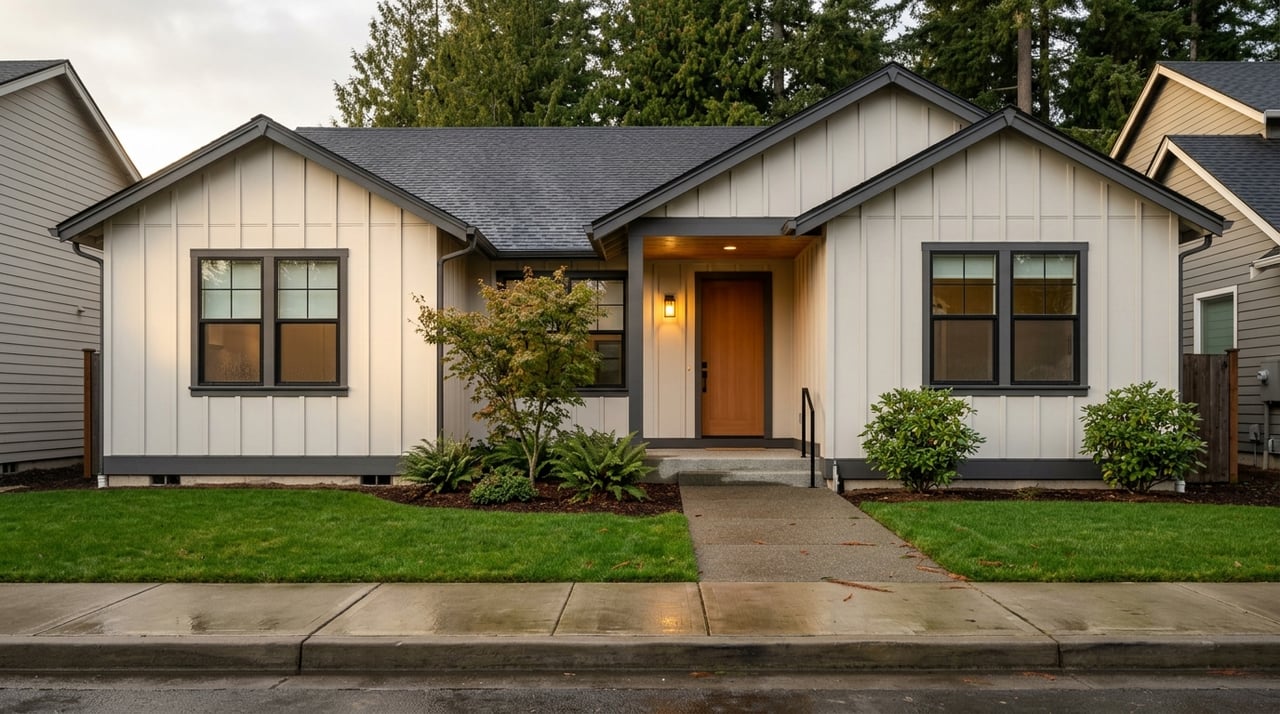
Ridgefield leans toward newer homes
If new construction is high on your list, Ridgefield stands out. The city says new homes are constantly being built, and its development activity includes current projects like code updates, subdivision planning, and major site plans such as Discovery Ridge.
Ridgefield also notes that most neighborhoods have HOAs, and new subdivisions are required to have one. That can appeal to buyers who want a more uniform neighborhood structure and newer community planning. It can also be a point to review carefully if you prefer fewer rules or want to avoid HOA dues.
Vancouver suburbs offer more housing-age variety
Vancouver’s neighborhoods give you a broader range of home styles and ages. City neighborhood profiles describe everything from early 20th-century homes in Hough to mixed-era housing in Hudson’s Bay, mostly 1970s and 1980s homes in Burton Ridge, and later suburban development in places like Northfield.
That means your search may feel more varied in Vancouver. You might find established neighborhoods, fully built-out suburban pockets, duplex condominiums, or newer-build sections depending on where you look.
Price and ownership trends tell part of the story
Ridgefield and Vancouver also differ in their overall housing profile. Ridgefield’s 2020-2024 ACS estimate shows an 82.0% owner-occupied rate and a median owner-occupied home value of $613,500. Vancouver’s comparable figures are a 50.8% owner-occupied rate and a median owner-occupied home value of $462,400.
Those numbers suggest Ridgefield currently skews more owner-occupied and higher priced, while Vancouver’s citywide market is more mixed. For you, that may translate to a choice between a newer, more ownership-focused setting in Ridgefield and a wider range of price points and housing formats in Vancouver.
Commute and Transportation Matter
Ridgefield is more corridor-oriented
Ridgefield sits along the I-5 corridor in northern Clark County, and that matters for daily life. Its mean travel time to work is 24.8 minutes, compared with 23.2 minutes in Vancouver.
That difference is not huge on paper, but the experience may still feel different. In Ridgefield, many daily trips are shaped by freeway access and north-south travel patterns.
I-5 congestion is a real factor
If your routine depends on heading south or using I-5 often, congestion deserves a close look. WSDOT reports that severe congestion on I-5 in the Vancouver region worsened in 2023 compared with 2022, especially during the southbound morning commute.
For buyers comparing Ridgefield with Vancouver suburbs, this is one of the biggest lifestyle tradeoffs. A home that looks great on a map may feel less convenient if your work, appointments, or regular activities require heavy freeway use.
Ridgefield has some transit options
Ridgefield is not cut off from transit, but its network is more limited than a denser urban setting. C-TRAN’s Route #48 Ridgefield/La Center connects Ridgefield to the 99th Street Transit Center and the Junction Park & Ride, and The Current offers on-demand service in the Ridgefield/La Center zone.
That gives you some flexibility, but most day-to-day planning in Ridgefield still centers on driving. If you want a lifestyle less dependent on freeway commuting, that is worth weighing early in your search.
Schools and Program Size
Ridgefield offers a smaller-district feel
Ridgefield School District is in growth mode. Its school list includes Ridgefield High School, View Ridge Middle School, Sunset Ridge Intermediate School, South Ridge Elementary School, Union Ridge Elementary School, Ridgefield Early Learning Center, Wisdom Ridge Academy, and Innovation Ridge CAPS.
The district also announced a third elementary school and a shift to a kindergarten-through-5th-grade model with a 6th-through-8th-grade middle school model beginning in the 2026-27 school year. For some buyers, that signals a smaller district that is actively adding capacity as the community grows.
Vancouver districts offer broader scale
On the Vancouver side, the district footprint is much larger. Vancouver Public Schools says it serves about 20,000 students across 58 square miles, with 23 elementary schools, 6 middle schools, 5 comprehensive high schools, and multiple choice and specialty programs.
Evergreen Public Schools, another major Vancouver-area district, says it serves about 22,126 students in 38 schools. If you are looking for a larger system with a broader menu of program types, Vancouver-area options may feel more established and varied.
The better fit depends on what you want
This is less about one area being better and more about matching your priorities. Ridgefield may appeal to you if you want a smaller district environment that is visibly growing. Vancouver suburbs may be a better match if you value district scale, program variety, and a longer-established school network.
Lifestyle and Neighborhood Feel
Ridgefield has a stronger small-town identity
Ridgefield leans hard into a small-town feel. The city describes itself as known for rich history, picturesque surroundings, neighborhoods and parks, and a strong sense of community.
Its parks and trails planning also emphasizes an interconnected system that supports that small-town character. If you want a place that feels intentionally community-oriented and still somewhat emerging, Ridgefield is the clearer fit.
Vancouver feels broader and more varied
Vancouver has neighborhood charm too, but it functions as a larger city. Because its neighborhoods range from historic areas to late-1990s suburban enclaves and newer-build pockets, the living experience can vary a lot depending on the section you choose.
That variety can be a real advantage. If you want more options in neighborhood style, home age, and setting, Vancouver’s suburbs may give you more ways to tailor your search.
Growth Outlook Can Shape Your Decision
Ridgefield is planning for major growth
Ridgefield’s long-term planning helps explain why the city feels so active. Its comprehensive plan says population is expected to rise from about 7,000 in 2016 to more than 26,000 by 2035, and the city is updating its 2025-2045 plan.
That level of planned growth helps explain the steady focus on subdivision activity, neighborhood design, and infrastructure. If you are comfortable buying into a city that is still evolving, Ridgefield may feel exciting and full of opportunity.
Vancouver is evolving through infill and reinvestment
Vancouver’s future growth looks different. The city says its updated comprehensive plan must account for at least 38,000 additional housing units and more than 40,000 jobs over the next 20 years.
Instead of a largely greenfield growth phase, Vancouver appears positioned for continued infill, redevelopment, and zoning updates. For buyers, that means a more mature market that is still changing, but in a different way than Ridgefield.
Which Area May Fit You Best?
If you are deciding between Ridgefield and Vancouver suburbs, here is a simple way to think about it:
- Ridgefield may fit you best if you want newer construction, HOA-managed subdivisions, a smaller district setting, and a stronger small-town feel.
- Vancouver suburbs may fit you best if you want more housing-age variety, more established neighborhoods, larger school systems, and a broader city framework.
- Ridgefield may require more commute planning if your daily routine depends heavily on I-5.
- Vancouver may give you more variety in neighborhood type, home style, and overall housing mix.
The right answer depends on how you want to live, not just what house you want to buy. When you narrow your search around commute patterns, home style, neighborhood structure, and growth pace, the choice usually becomes much clearer.
If you want help comparing Ridgefield with Vancouver-area neighborhoods in a practical, honest way, Julie Mikutin Real Estate can help you sort through your options with local guidance, responsive communication, and hands-on support.
FAQs
Is Ridgefield still a new-construction market?
- Yes. Ridgefield’s active development pages, subdivision activity, and long-range planning all point to a market that is still adding neighborhoods and infrastructure.
Are Vancouver suburbs mostly older neighborhoods?
- No. Vancouver includes older neighborhoods, but it also has more suburban areas with newer or later-built housing, including places like Northfield and Fircrest.
Does Ridgefield have a more small-town feel than Vancouver suburbs?
- Yes. Based on the city’s own messaging, park planning, and neighborhood structure, Ridgefield presents a stronger small-town identity than the broader Vancouver area.
Is commuting from Ridgefield very different from commuting in Vancouver?
- It can be. Ridgefield is more closely tied to I-5 corridor travel, and regional southbound I-5 congestion is an important factor for many daily commuters.
Are Ridgefield home prices generally higher than Vancouver home prices?
- Based on 2020-2024 ACS estimates, Ridgefield had a higher median owner-occupied home value at $613,500 compared with Vancouver at $462,400.
Do Ridgefield and Vancouver offer different school experiences?
- Yes. Ridgefield offers a smaller district environment that is growing, while Vancouver-area districts are larger and offer a broader range of schools and specialty programs.